

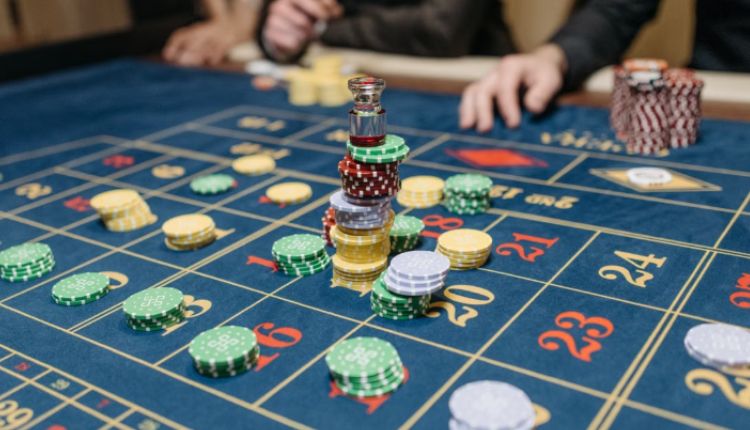
Blaise Pascal supposedly built it while chasing a perpetual motion machine in 1655. French Dominican monks supposedly built it to hide a private card game from disapproving abbots. Neither claim survives a close reading of the surviving records, yet both keep resurfacing in casino brochures as if they were settled fact. The wheel simply appears in French gambling houses around 1796, fully formed, with no drawing, patent, or workshop ledger to say who cut the first pocket.
That gap has never stopped the game from spreading. A roulette wheel with 37 or 38 pockets now spins in mechanical form in land-based halls and in live-streamed form on phones, where a dealer in a studio calls the number the way a croupier once did in Monte Carlo. Anyone who opens a game like lightning roulette india today is watching a 230-year-old mechanical puzzle rendered through a camera rig instead of a physical table, with the same unresolved history sitting underneath the graphics.
Three men who probably didn’t invent it
Historians have traced at least four separate origin claims, and each one collapses under a specific detail. Pascal’s notebooks mention a wheel-shaped device, but nothing about numbered pockets or betting. The monk story has no monastery records to back it. An Italian board game called Biribi, played with 36 or 70 numbered slots in the 1700s, clearly fed into the format, but a board game is not a wheel.
What survives is a French cabinetmaker’s reference from 1796, describing a wheel already close to today’s layout, with no name attached to the design. A detailed timeline of these competing claims, none of them conclusive, is laid out in Britannica’s entry on the game, which treats the invention question as genuinely open rather than settled trivia.
| Claimed inventor | Era cited | Core story | Why it falls apart |
| Blaise Pascal | 1655 | Built a wheel while testing perpetual motion | No mention of numbers or wagering in his own writing |
| Dominican monks | 1700s | Disguised a card game as a spinning device | No monastery archive confirms the device |
| Italian gamblers | 1720s | Adapted the board game Biribi into a wheel | Biribi used a flat board, not a rotating wheel |
| Unnamed Parisian makers | 1796 | Built the first wheel matching modern layout | The record names a location, not a person |
A few physical facts are not in dispute, whatever the origin story turns out to be:
- The wheel has kept a near-identical pocket count, 37 in the European layout, since the 1800s.
- The alternating red and black pattern was standardized before any single casino chain existed.
- Wheel manufacturers still balance pockets by hand to stop long-run bias, a problem first documented in the 1890s.
- The zero pocket, added for the house edge, predates the American double-zero by several decades.
What actually changed once the wheel left the parlour
The mystery around who built the first wheel matters less than what engineers did with it once casinos started taking it seriously as a business. Two shifts moved the game from a wooden curiosity to the format played today, and neither one required solving the invention question at all.
Mechanical wheels and the physics nobody could hide
By the 1890s, professional bias-trackers were recording thousands of spins by hand to catch wheels that favored certain numbers due to worn bearings or uneven pockets. Casinos responded by rebalancing wheels weekly and rotating them between tables, a maintenance routine that still runs in physical venues. The lesson engineers took from that era was blunt: any mechanical asymmetry gets found eventually, so precision manufacturing became the real defense against advantage players.
Cameras, dealers and a screen instead of a table
Live-streamed formats solved a different problem: distance. Instead of shipping a physical wheel to every player, studios put one wheel in front of several cameras and a dealer, then broadcast the spin to thousands of screens at once. Some versions add a random multiplier drawn separately from the wheel result, layering a second mechanic on top of the original 18th-century design. The wheel’s shape never changed; the delivery method did, and that shift happened within the last fifteen years, not over three centuries.
So the honest answer to who built the first roulette wheel is that no single name holds up, and the people who kept the game alive for two centuries were mostly anonymous cabinetmakers, wheel balancers and, later, broadcast engineers. That pattern is not unusual: plenty of everyday objects, from the bicycle chain to the crossword grid, reached their modern form through incremental tinkering rather than a single inventor’s flash of insight.